Product
Cloud vs On-Premise: Infrastructure Costs Compared
cloud-on-premise-infrastructure-costs-comparison
cloud-on-premise-infrastructure-costs-comparison
cloud-on-premise-infrastructure-costs-comparison
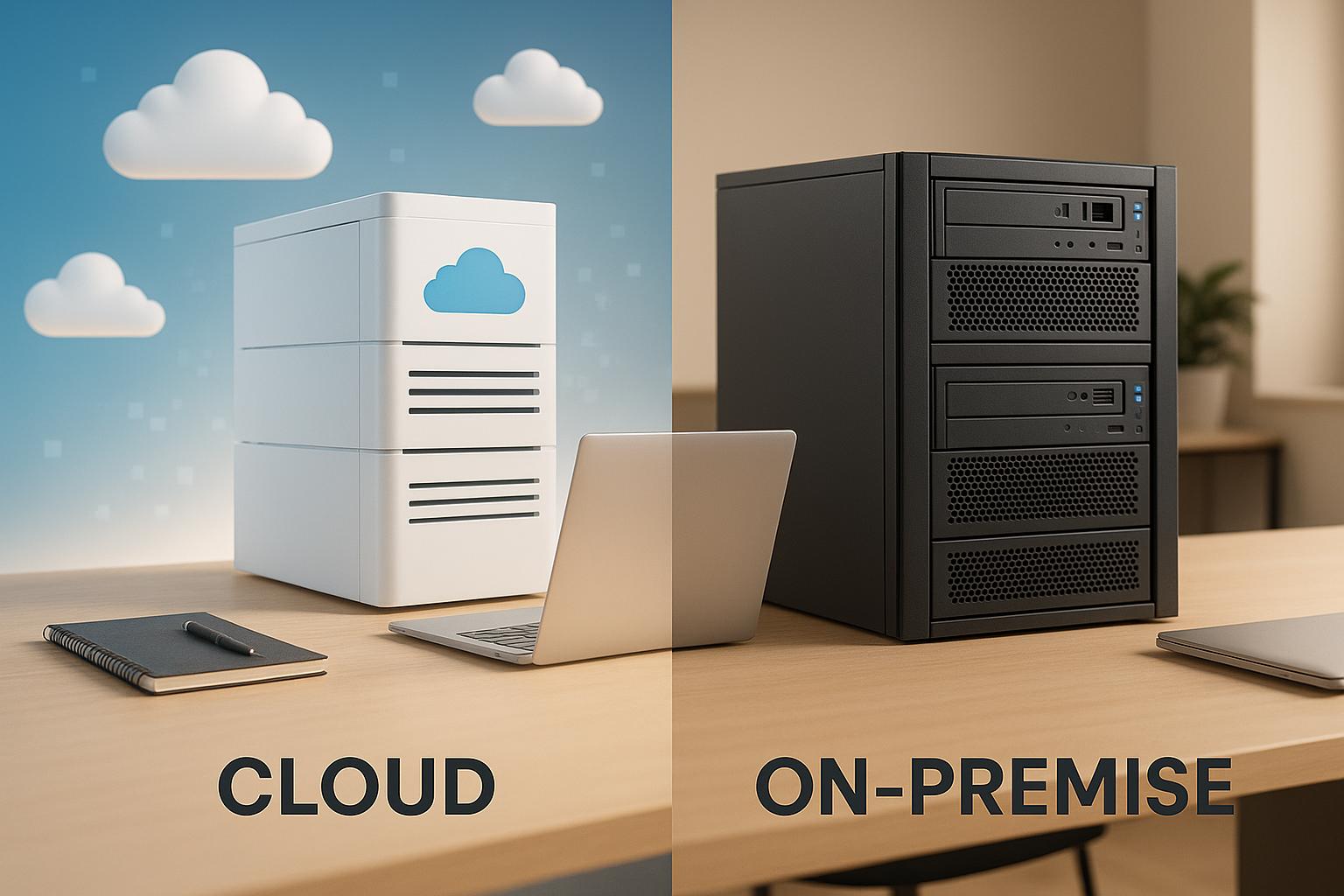
Choosing between cloud-based and on-premise infrastructure comes down to cost, scalability, and control. Cloud systems have lower upfront costs and offer pay-as-you-go pricing, but hidden fees and vendor reliance can add complexity. On-premise setups demand high initial investments but provide long-term cost predictability and full control over data and security.
Key Takeaways:
Cloud: Lower initial costs, flexible scaling, but potential hidden fees like data transfer costs.
On-Premise: High upfront investment, complete control, but requires ongoing maintenance and dedicated IT staff.
Quick Comparison:
Aspect | Cloud | On-Premise |
|---|---|---|
Upfront Costs | Minimal | High (hardware, licenses, setup) |
Scaling | Real-time, pay as needed | Requires hardware upgrades |
Maintenance | Handled by provider | Requires in-house IT team |
Control | Limited (vendor-managed) | Full control over systems |
Hidden Costs | Data transfer, premium features | Few, but hardware upgrades costly |
Your choice depends on balancing cost, control, and scalability to align with your business goals.
On Prem VS Cloud | Which is Right for You in 2024?
1. Cloud-Based Infrastructure Costs
Using cloud infrastructure means adopting a pay-as-you-go model, which spreads costs over time instead of requiring hefty upfront investments. This flexible approach aligns expenses with actual usage, making it easier to manage budgets.
Cloud costs can generally be grouped into four areas: setup, ongoing maintenance, scalability, and potential hidden fees.
Initial Setup Costs
Getting started with cloud services typically involves minimal upfront fees, as most providers offer quick sign-up and activation. However, the real setup costs come from migrating existing data, applications, and systems to the cloud. This process often requires resources for data transfer, configuring applications, and ensuring systems are fully operational in the new environment.
Another key expense? Training your IT team to effectively manage and utilize cloud tools. While these costs are front-loaded, they’re essential for a smooth transition.
Ongoing Maintenance Costs
Cloud services operate on a subscription basis, with costs tied to your usage of compute power, storage, and network capacity. This makes it easy to scale payments up or down depending on your needs.
One major perk of cloud maintenance is that providers handle many of the routine tasks for you. Security updates, patches, and hardware repairs are typically included, meaning you don’t need to invest in managing these in-house. This can save both time and money in the long run.
Scalability
One of the biggest advantages of cloud infrastructure is its ability to scale effortlessly. Whether you’re dealing with seasonal spikes or sudden growth, auto-scaling features adjust resources in real time. This eliminates the need to buy and maintain extra hardware, giving you the flexibility to handle fluctuating demands without overcommitting.
Hidden Costs
While cloud pricing is often straightforward, there are additional expenses to watch out for. These include inter-region data transfer fees, charges for premium support, advanced compliance or security features, and costs stemming from over-provisioning resources.
To keep these hidden costs in check, it’s a good idea to regularly review your usage and adjust your services accordingly. Proactive management can help you avoid unnecessary expenses while maximizing the value of your cloud investment.
2. On-Premise Infrastructure Costs
On-premise infrastructure operates on a capital expenditure model, meaning businesses must make a hefty upfront investment. These expenses cover everything from hardware and software licenses to preparing facilities and implementation costs. Let’s break down the major components of these initial investments.
Initial Setup Costs
Unlike cloud-based solutions that rely on ongoing operational expenses, on-premise systems demand significant capital outlay upfront. This can be especially challenging for mid-sized businesses to manage.
For instance, entry-level servers are priced between $3,000 and $5,000 per unit, while enterprise-grade servers can easily surpass $10,000. Storage systems, depending on their capacity and performance, range from $20,000 to $50,000.
But it’s not just about hardware. Software licenses for critical systems and tools add to the bill, along with the cost of preparing facilities to house and support the infrastructure. To put it into perspective, in July 2025, a retail chain invested $300,000 in redundant hardware, while a healthcare provider spent $500,000 to construct a facility meeting HIPAA compliance standards.
Advantages and Disadvantages
When it comes to choosing between cloud-based and on-premise infrastructure, each option has its own set of benefits and challenges that can significantly impact your organization's operations and budget. Building on the earlier cost breakdowns, let's explore the key trade-offs to help you make an informed decision that aligns with your business goals.
At the core of this decision is the balance between control and convenience. Cloud solutions shine when it comes to flexibility and cost efficiency, thanks to their lower upfront costs and pay-as-you-go pricing models. It's no surprise that 94% of enterprises are leveraging cloud services, with cost savings being a major motivator. On the other hand, on-premise systems offer unmatched control and independence, making them a preferred choice for organizations with stringent data and security requirements.
However, the choice isn't always black and white. Many businesses are finding success with hybrid models, blending the strengths of both approaches to meet diverse operational needs.
Aspect | Cloud-Based Advantages | Cloud-Based Disadvantages | On-Premise Advantages | On-Premise Disadvantages |
|---|---|---|---|---|
Cost Structure | Lower upfront costs with pay-as-you-go pricing | Hidden fees like data egress and API charges | Predictable long-term costs after initial investment | High upfront capital expenditure |
Scalability | Rapid scaling of resources, often within minutes | Risk of vendor lock-in | Full control over scaling decisions | Scaling requires costly and time-intensive hardware upgrades |
Maintenance | Provider handles updates and hardware issues | Limited control over maintenance schedules | Full control over timing and procedures | Requires dedicated IT staff and expertise |
Control & Security | Managed security provided by the vendor | Limited ability to customize configurations | Complete authority over data and security protocols | Full responsibility for implementing and maintaining security |
Connectivity | Accessible from anywhere with a reliable internet connection | Dependent on continuous internet access | Operates independently of internet for internal tasks | Limited remote access capabilities |
The table above lays out these distinctions clearly. For instance, cloud-based solutions allow for quick, dynamic resource scaling, while on-premise scaling requires significant time and financial investment due to hardware upgrades.
Control remains a critical factor, particularly for industries with strict regulations. On-premise systems provide full authority over data and security configurations, which is a significant advantage for organizations that cannot afford to rely on third-party providers. Meanwhile, cloud solutions require a certain level of trust in the vendor's ability to manage security and data integrity.
Looking ahead, the trend toward cloud adoption shows no signs of slowing down. Projections reveal that 83% of enterprise workloads are expected to move to the cloud, with Gartner forecasting an annual growth rate of 21.9% for cloud infrastructure services. IDC further predicts that global cloud spending will hit an astounding US$1 trillion by 2024. These figures reflect a growing shift toward cloud-first strategies, driven by the promise of scalability, agility, and cost management.
Ultimately, understanding these trade-offs is essential for aligning your infrastructure choices with your organization's operational needs and long-term IT investment strategies.
Conclusion
When it comes to cloud versus on-premise infrastructures, the differences in cost structure are impossible to ignore. Cloud solutions often come with lower upfront expenses thanks to their pay-as-you-go model, while on-premise systems require a hefty initial investment but tend to offer more predictable costs over time.
For businesses, the ability to scale resources quickly is a key advantage of cloud services. They can adapt to fluctuating demands almost instantly, which could open doors to new market opportunities. That said, cloud pricing isn't always straightforward. Hidden costs, like data transfer fees and premium support, can sneak up on you, making careful oversight a must. On the other hand, on-premise systems generally provide clearer ongoing expenses but may come with additional costs for maintaining IT staff and upgrading hardware.
Ultimately, understanding how these cost factors align with your business needs is essential. Choose the option that fits your financial priorities and operational goals. Whichever route you take, keeping a close eye on expenses and maintaining strong cost management practices will help ensure your IT investments drive your company's growth and success.
FAQs
What hidden costs should I watch for with cloud infrastructure, and how can I manage them effectively?
Cloud infrastructure often brings along unexpected costs such as data egress fees, charges for idle resources, complicated backup and recovery processes, vendor lock-in, and unplanned data transfer expenses. If left unchecked, these costs can escalate quickly.
To keep expenses under control, it’s essential to conduct regular audits of your cloud usage. Focus on optimizing resource allocation and leverage cloud cost management tools to pinpoint inefficiencies. Be strategic about how you store and transfer data to avoid extra fees. Additionally, consider negotiating terms with your provider to reduce risks, such as being tied to a single vendor.
How do the costs and efficiency of scaling cloud infrastructure compare to on-premise solutions?
Cloud infrastructure is a smart choice for scaling because it offers the ability to adjust resources quickly based on demand. With pay-as-you-go pricing, you can manage expenses effectively, paying only for what you actually use.
On the other hand, on-premise solutions might make sense for businesses with consistently high workloads, but they come with hefty upfront costs and ongoing maintenance requirements. Cloud services, however, eliminate much of this overhead and streamline scaling. This makes them a great option for businesses dealing with fluctuating or unpredictable demands. For mid-sized companies, in particular, this flexibility can help align IT resources with both their growth goals and budget constraints.
What key factors should businesses evaluate when choosing between cloud and on-premise infrastructure to align with their long-term IT goals?
When choosing between cloud and on-premise infrastructure, businesses need to weigh a few key considerations to match their long-term goals. Start by examining scalability - can the option you pick handle future growth without major disruptions? Next, think about security and whether it aligns with regulatory requirements. And don’t forget the total cost of ownership, which includes upfront investments, ongoing maintenance, and any hidden expenses that might crop up.
Another critical factor is the level of control and customization your business requires for its data and systems. Your choice should support operational efficiency, minimize risks, and align with your broader strategic goals. This way, your IT infrastructure can continue being a strong asset as your business adapts and grows.
